If you’re considering breast reduction surgery, you’re probably exploring different payment options that can help make this life-changing procedure more affordable. Many of our patients come to us with questions about using their healthcare savings account (HSA) to cover the cost of their surgery.
So, can you use HSA for breast reduction surgery? The short answer is yes, but there are some requirements.
Let’s walk through everything you need to know about using HSA funds for breast reduction, including what qualifies, the documentation you’ll need, and how to maximize your tax savings.
Can You Use HSA for Breast Reduction?
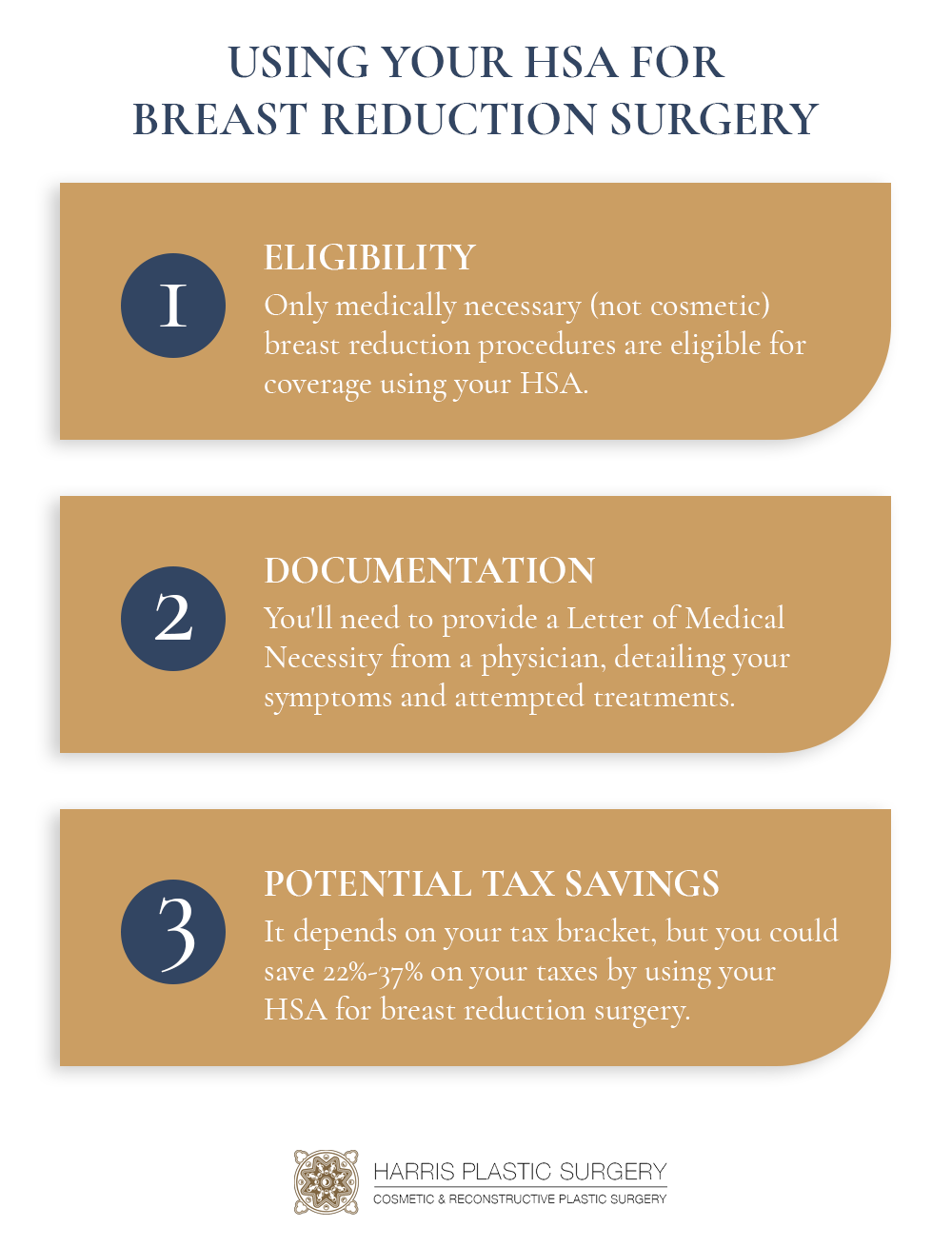
HSA funds can be used for insurance cost-sharing expenses in breast reduction surgery, but only when the procedure is considered medically necessary rather than cosmetic. The key difference lies in whether you have documented medical symptoms that affect your quality of life and daily activities.
According to major HSA administrators like Cigna and HealthEquity, breast reduction qualifies as an eligible medical expense when it’s performed to treat or prevent illness, not just for appearance enhancement.
What Makes Breast Reduction “Medically Necessary”?
For your breast reduction to qualify for HSA coverage, you’ll typically need to demonstrate that large breasts are causing genuine health problems. Here are the most common qualifying symptoms:
Physical Symptoms That Qualify
- Chronic neck, shoulder, and back pain lasting 6+ months
- Posture problems due to breast weight
- Skin irritation or rashes under the breasts (intertrigo)
- Breathing difficulties or shortness of breath
- Headaches related to neck and shoulder strain
- Numbness or tingling in arms or hands
- Grooves from bra straps that don’t fade
Activity Limitations
- Difficulty exercising or participating in physical activities
- Problems finding properly fitting clothes or bras
- Sleep disruption due to breast size
- Interference with work or daily activities
Most insurance companies and benefits administrators require that these symptoms have persisted for at least six months despite conservative treatments like physical therapy, supportive bras, or pain management.
Required Documentation: The Letter of Medical Necessity
To use HSA funds for breast reduction, you’ll need a Letter of Medical Necessity (LMN) from a qualified physician. This is a detailed medical document that proves your surgery is treating a health condition, not enhancing appearance.
What Your LMN Should Include
- Detailed symptom history with specific duration (usually 6+ months)
- Physical examination findings documenting your symptoms
- Previous treatments tried and their effectiveness
- Impact on daily activities and quality of life
- Amount of tissue to be removed from each breast
- Medical diagnosis codes (ICD-10 codes) for your conditions
- Physician’s recommendation for surgical treatment
Your plastic surgeon can provide this letter, but some patients find it helpful to also have documentation from their primary care physician or other specialists who have treated related symptoms.
Step-by-Step Guide to Using Your HSA
Wondering how to use your HSA for breast reduction surgery? Here are the steps you’ll need to take with your plastic surgeon.
Step 1: Document Your Medical Necessity
- Schedule consultations with qualified surgeons
- Gather medical records showing symptom history
- Try conservative treatments if you haven’t already
- Get your Letter of Medical Necessity
Step 2: Verify HSA Coverage
- Contact your HSA administrator to confirm breast reduction coverage
- Ask about specific documentation requirements
- Understand any pre-approval processes
Step 3: Plan Your Payment Strategy
- Option 1: Pay directly from HSA at time of service (best for patients who have already confirmed their surgery qualifies as a medical (not cosmetic) procedure)
- Option 2: Pay out-of-pocket and reimburse yourself from HSA later (best for patients who don’t yet have enough money in their HSA but expect to accumulate funds over time, or who want to delay using their HSA until after insurance claims are processed)
- Option 3: Use HSA debit card for eligible expenses (best for patients who want a convenient, hassle-free way to pay for medical expenses as they arise)
Step 4: Keep Detailed Records
- Save all receipts and medical documentation
- Keep copies of your Letter of Medical Necessity
- Document how expenses relate to medical treatment
Understanding the Costs and Potential Savings
Breast reduction surgery costs vary significantly based on location, surgeon experience, and complexity of the procedure. A medically necessary breast reduction that’s partially covered by insurance (deductible and coinsurance cost sharing is the patient’s responsibility) can leave patients paying anywhere between $2,000 and $8,000.
To make the math simple, let’s assume your surgery costs $10,000 out of pocket. If you’re in the 24% tax bracket and your surgery costs $10,000:
- Traditional payment: $10,000 (after-tax dollars)
- HSA payment: $10,000 (pre-tax dollars = $7,600 out of pocket)
- Your savings: $2,400 in taxes
For higher earners in the 32% or 37% tax brackets, the savings can be even more substantial.
What If You Don’t Meet Medical Necessity Criteria?
If your breast reduction is considered cosmetic rather than medically necessary, you won’t be able to use HSA funds. However, you still have payment options:
- Payment plans offered by many plastic surgery practices
- Medical credit cards like CareCredit
- Personal loans for medical procedures
- Traditional savings or credit cards
The key is to work with a trusted, board-certified plastic surgeon and their team who can help you navigate medical necessity, insurance coverage, and payment options to keep your out-of-pocket costs as low as possible.
Take the Next Step With Harris Plastic Surgery
If you’re dealing with the physical and emotional challenges of overly large breasts, don’t let cost concerns prevent you from exploring your options. Not only can you use HSA for breast reduction, but there are also other options to make surgery more affordable while providing life-changing relief from chronic pain.