
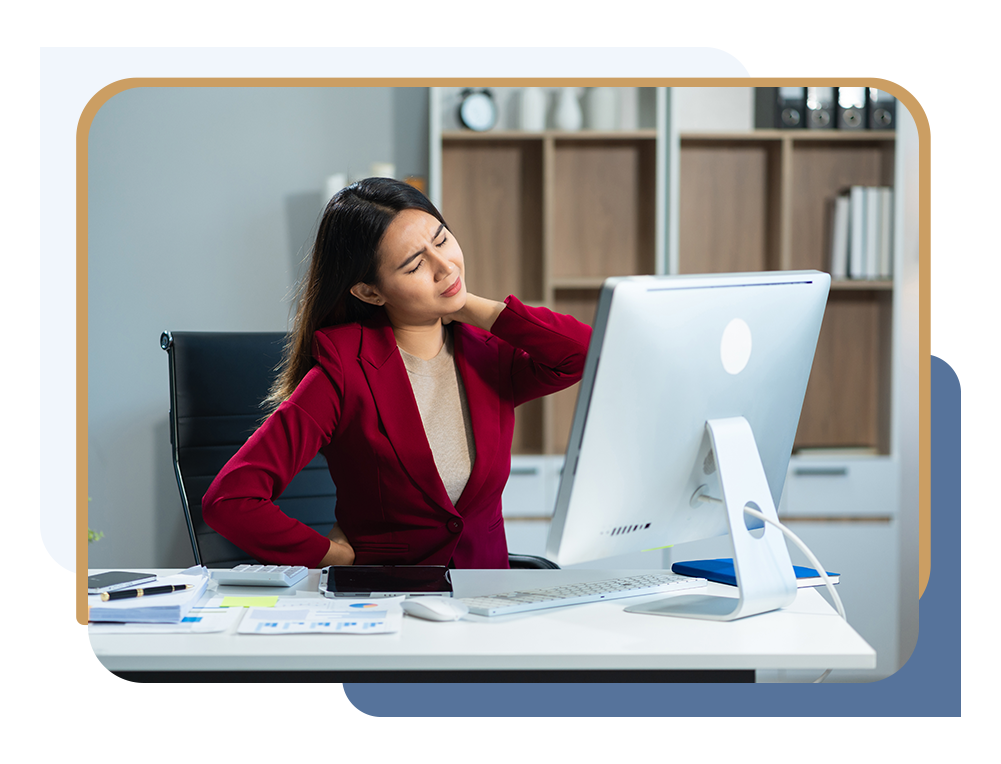
Poor posture and back pain often go hand-in-hand, and they’re both made worse by having overly large breasts. In fact, research shows that 85% of patients report significant improvement in back pain following breast reduction surgery.
In this guide, we’ll help you understand what happens to your posture before and after breast reduction. We’ll explain how large breasts affect your natural posture and the positive changes many women notice after breast reduction surgery.
How Large Breasts Impact Your Posture Before Surgery
When breasts are heavier than your body is naturally built to carry, your shoulders tend to roll forward and your spine works overtime to keep you balanced. This can lead to slouching, muscle strain, and a chain reaction of aches and pains throughout your body.
| Pre- Surgery Postural Issues Caused by Large Breasts | ||
|---|---|---|
| Postural Problem | How it Feels Day-to-Day | Long-term Consequences |
| Forward Head Posture | Neck feels tight, head leans forward | Headaches, stiff neck, nerve pain |
| Rounded Shoulders | Shoulders roll forward, harder to stand tall | Achy upper back, shallow breathing |
| Anterior Pelvic Tilt | Sore lower back, hips feel out of line | Ongoing back pain, hip discomfort |
| Muscle Imbalances | Chest feels tight, upper back feels weak | Chronic fatigue, less flexibility |
| Spinal Misalignment | Hard to stay upright for long | Joint pain, long-term posture issues |
Visual Signs of Poor Posture Before Surgery
While some women are aware of their posture, many don’t realize how rounded their shoulders are or how much time they spend slouching. If you’re not sure about your posture, you can look for:
- Your head usually tilting forward in photos
- Visible shoulder rounding when you’re standing naturally
- Difficulty in maintaining an upright posture without constantly correcting yourself
More often than not, these signs indicate that your posture isn’t ideal and might be causing some of your aches and pains.
The Domino Effect of Poor Posture
Large breasts create what you can think of as a “postural domino effect.” The excessive weight of your breasts forces your body to compensate by:
- Shifting your center of gravity forward to maintain your balance
- Overworking your posterior neck and back muscles to counteract the forward pull
- Compressing the brachial plexus nerve network, causing numbness in your arms and hands
- Restricting diaphragmatic breathing due to your rounded shoulder position
How Your Posture Improves After Breast Reduction

One of the first things patients often notice after breast reduction is how much easier it feels to stand tall. With the constant forward pull gone, your muscles relax, your breathing feels deeper, and everyday activities like exercising, stretching, or even sleeping become more comfortable. Over time, these small improvements add up to better posture, less pain, and more confidence.
A study performed using postural analysis software also reported:
- Improved spinal, pelvic, and shoulder alignment after breast reduction surgery
- Back and shoulder pain scores decreased significantly
Timeline of Postural Changes After Breast Reduction
Everyone’s recovery looks different, but here’s a general idea of how posture often improves after breast reduction:
| Changes to Posture After Breast Reduction Surgery | ||
|---|---|---|
| Recovery Phase | Postural Changes | What Patients Notice |
| Week 1-2 | Immediate relief from the extra weight | Standing tall feels easier, less pulling on your shoulders and back |
| Month 1-2 | Muscles start to relax and adjust | Neck and shoulder pain eases up, daily activities feel less tiring |
| Month 3 | Posture noticeably improves | You feel more upright and balanced without constantly correcting yourself |
| Month 6+ | Body fully adapts to its new balance | Long-term comfort and better spinal health |
If you want to learn more about changes to posture before and after breast reduction, take a look at our before and after photo gallery and testimonials from our patients.
Benefits of Improving Your Posture with Breast Reduction
Improving your posture may seem like a small change, but it can have a big impact on both your physical health and overall well-being.
Easier Breathing and More Energy
With your shoulders pulled back and your chest more open, it’s easier to take full, deep breaths. That means better oxygen flow, more energy, and even improved focus.
Freedom to Move Again
Many women say activities that once felt uncomfortable, like running, yoga, or even just stretching, become enjoyable again. It’s easier to exercise, recover, and stay active when your body isn’t fighting against poor posture.
Better Sleep and Daily Comfort
When your spine and muscles aren’t under constant strain, falling asleep and staying comfortable at night gets a lot easier. You may also notice fewer aches and pains throughout the day.
Long-Term Protection for Your Back and Joints
Good posture doesn’t just help now, it also protects you down the road. By reducing strain on your spine, you can lower your risk of early arthritis, chronic pain, or other joint issues.
Find Better Posture With Harris Plastic Surgery
Dr. Stephen U. Harris brings exceptional expertise to breast reduction surgery, having performed thousands of procedures throughout his career. As Chief of Plastic Surgery at Good Samaritan Hospital, Dr. Harris understands that successful breast reduction is about restoring your body’s natural biomechanics and improving your overall quality of life.
The research is clear: women who undergo breast reduction experience lasting improvements in their posture and spinal health. At Harris Plastic Surgery, we’re committed to helping you achieve not just the aesthetic results you desire, but also the beneficial changes to your posture before and after breast reduction that can improve your quality of life for years to come.
