

If you’ve lost weight and you’re dealing with excess, sagging skin, you’re not alone. Many people discover that loose skin is the frustrating final hurdle after major weight loss, and it can affect not just how you look, but how you feel and move through your day.
The good news is that skin removal surgery offers real solutions to help you complete your transformation and finally feel at home in your body. Let’s explore your options, what each procedure involves, and how to decide which path is right for you.
Why Does Excess Skin Happen After Weight Loss?
Skin is remarkably elastic, but only to a point. When it’s stretched for a long period of time due to weight gain or pregnancy, it may not fully retract after weight loss. Factors that influence skin laxity include:
- How much weight you lost: Larger weight loss typically means more excess skin
- How quickly you lost it: Rapid weight loss gives skin less time to adapt
- Your age: Younger skin has more elasticity and may bounce back better
- How long you carried the extra weight: The longer skin is stretched, the less likely it is to retract
- Genetics: Some people naturally have more elastic skin than others
Patients who lose a significant amount of weight, especially after bariatric surgery or GLP-1 medications, often experience excess skin in multiple areas of the body. While building muscle can help fill out some areas, only surgical removal can eliminate significant excess skin folds.
Common Types of Skin Removal Surgery
Skin removal procedures can address virtually any area of your body where excess skin hangs. Many people need more than one procedure to achieve their goals, and surgeons often combine multiple surgeries into a single operation to reduce overall recovery time.
Lower Body Procedures
| Procedure | Target Area | What It Does | Recovery Time |
| Tummy Tuck (Abdominoplasty) | Abdomen | Removes excess skin and fat from the stomach area; tightens abdominal muscles | 2-4 weeks for light activity; 6-8 weeks for full recovery |
| Panniculectomy | Lower abdomen | Removes the “apron” of skin hanging below the belly button | 2-4 weeks for light activity; 6-8 weeks for full recovery |
| Lower Body Lift | Abdomen, buttocks, hips, thighs | Comprehensive procedure that tightens the entire lower torso in one surgery | 4-6 weeks for light activity; 8-12 weeks for full recovery |
| Thigh Lift | Inner or outer thighs | Removes sagging skin to create smoother, more defined legs | 2-4 weeks for light activity; 6 weeks for full recovery |
| Buttock Lift | Buttocks and lower back | Lifts and tightens sagging buttocks for a firmer contour | 3-4 weeks for light activity; 6-8 weeks for full recovery |
Tummy Tuck vs. Panniculectomy
These two procedures sound similar, but there’s an important distinction. A tummy tuck is more comprehensive; it removes excess skin, tightens your abdominal muscles, and sculpts your entire midsection for an aesthetically pleasing contour. A panniculectomy specifically removes the pannus (the apron of skin hanging below your belly button) but doesn’t significantly reshape or tighten your abdomen.
Because a panniculectomy addresses a specific medical concern (the excess skin that can cause rashes, infections, and mobility problems) it may be more likely to qualify for insurance coverage than a tummy tuck, which is typically considered cosmetic.
Upper Body Procedures
| Procedure | Target Area | What It Does | Recovery Time |
| Arm Lift (Brachioplasty) | Upper arms | Removes “bat wing” skin from upper arms | 1-2 weeks for light activity; 4-6 weeks for full recovery |
| Breast Lift (Mastopexy) | Breasts | Reshapes sagging breasts by removing excess skin and repositioning tissue | 1-2 weeks for light activity; 4-6 weeks for full recovery |
| Upper Body Lift | Back, chest, arms | Addresses sagging skin in the upper torso, including “bra rolls” | 2-4 weeks for light activity; 6-8 weeks for full recovery |
| Face and Neck Lift | Face and neck | Removes loose skin to create a smoother, more youthful appearance | 1-2 weeks for light activity; 3-4 weeks for full recovery |
Are You a Good Candidate for Skin Removal Surgery?
Not everyone is ready for skin removal surgery right after losing weight. Plastic surgeons typically look for specific criteria to ensure you’ll get the best results and stay safe during and after your procedure.
You may be a good candidate if you:
- Have maintained a stable weight for at least six months
- Are at or near your goal weight (weight loss after surgery can affect your results)
- Don’t smoke or are willing to quit
- Are in good overall health to tolerate anesthesia and surgery
- Have realistic expectations about what surgery can achieve
- Understand that scarring is inevitable
When Skin Removal Surgery Becomes Medically Necessary
A majority of skin reduction procedures are considered cosmetic and generally are not covered by insurance. There are instances where skin removal is medically necessary, but insurance providers have strict coverage requirements. Your procedure may be medically necessary if your loose skin is causing these issues:
- Chronic rashes or skin infections in the folds of excess skin
- Persistent moisture and chafing that doesn’t respond to other treatments
- Mobility limitations that prevent you from exercising or moving comfortably
- Hygiene difficulties due to hard-to-clean skin folds
- Chronic pain from the weight of hanging skin
It’s important to start with a consultation with an experienced, board-certified plastic surgeon, as they can help you understand your options and, if applicable, navigate insurance pre-authorization requirements.
Out-of-Network Providers and the No Surprises Act
Many patients assume they must choose an “in-network” surgeon to receive insurance coverage, but that isn’t always the case. Some insurance plans include out-of-network benefits, which may provide partial coverage for procedures performed by out-of-network providers. This can give patients more flexibility to choose a surgeon with the right experience and reputation rather than limiting their options to providers contracted with their insurance plan.
Patients also have protections under the No Surprises Act, which took effect in 2022. If skin removal surgery is performed at an in-network hospital or surgical center, the law helps prevent surprise bills from out-of-network providers involved in your care, such as anesthesiologists. In these cases, patients generally cannot be charged more than their plan’s in-network cost-sharing for those services.
How Much Does Skin Removal Surgery Cost?
The cost of skin removal surgery varies widely depending on which procedures you need, where you live, and your surgeon’s experience. Here are typical price ranges for the most common procedures:
- Tummy Tuck: $5,000 – $25,000
- Panniculectomy: $8,000 – $15,000
- Lower Body Lift: $18,000 – $24,000
- Arm Lift: $7,000 – $9,500
- Thigh Lift: $6,600 – $11,500
- Breast Lift: $8,000 – $12,000
These estimates typically include surgeon fees, anesthesia, facility costs, and immediate post-operative care. Additional costs may include compression garments, pain medications, and follow-up appointments.
Your Next Step: Schedule a Consultation
If excess skin is holding you back from fully enjoying your weight loss transformation, skin removal surgery might be the answer. The right surgeon will guide you through every step, answer all your questions, and create a personalized plan that addresses your unique needs.
You’ve already done the hardest part by losing the weight. Now it’s time to complete your transformation and finally feel as good as you look. Contact Harris Plastic Surgery today to schedule a consultation with Dr. Stephen U. Harris to discuss your options.
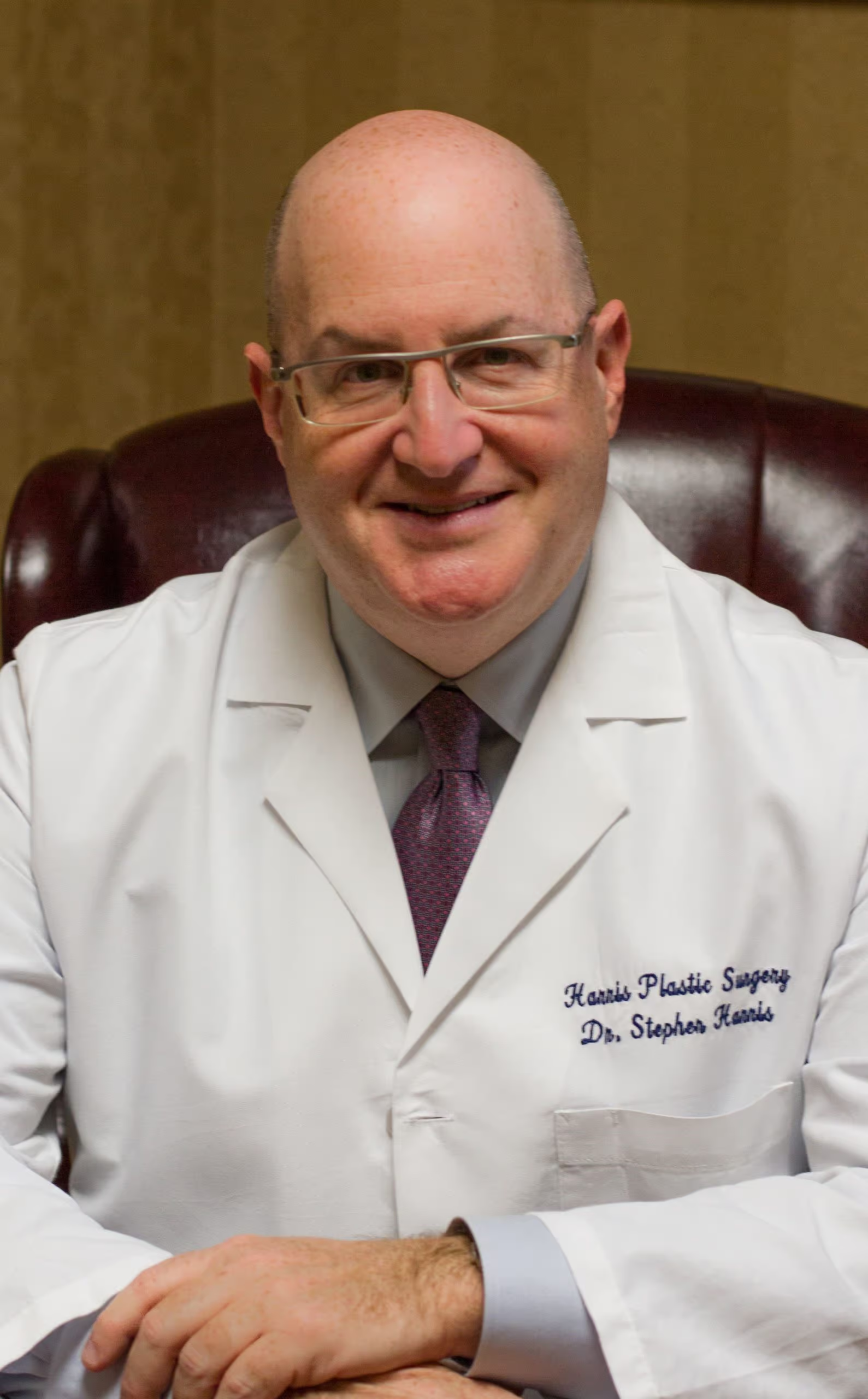
Stephen U. Harris, MD FACS
Dr. Stephen U. Harris is a board-certified plastic surgeon and recognized expert in breast reduction and reconstruction surgeries, having performed thousands in his career. When it comes to patient care, his philosophy is that every surgery should improve his patient’s overall quality of life, not just their appearance. Dr. Harris stays up-to-date on all the latest advancements in breast augmentation, reconstruction, and reduction and is a recognized innovator in the field. In fact, he was the first surgeon at Good Samaritan Hospital to offer primary prepectoral implant breast reconstruction, as well as secondary prepectoral revision surgery.
Dr. Harris also serves as Chief of Plastic Surgery at Good Samaritan Hospital in West Islip, New York, and is an active staff surgeon (and former Chief of Plastic Surgery) at South Shore University Hospital in Bay Shore, New York.