

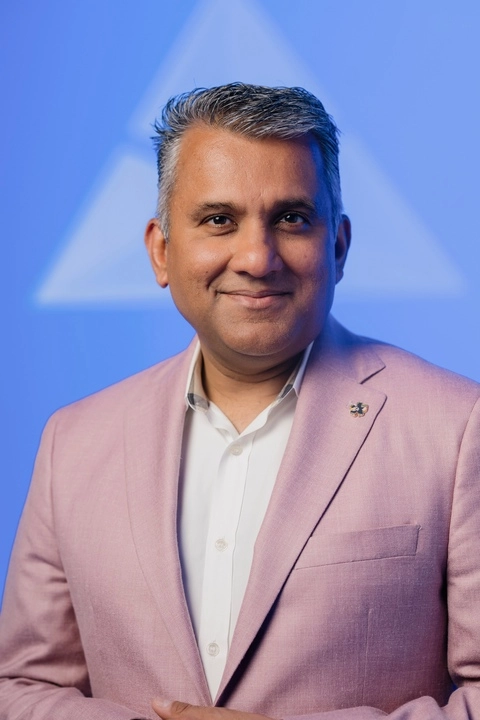
 Today we’re speaking with Amol Nirgudkar, CEO of Patient Prism, the leader in Predictive AI Revenue Activation for healthcare organizations. Patient Prism improves patient call-to-appointment conversion rates by 30%, helping specialty practices, medical groups, and hospitals capture revenue lost to unconverted patient inquiries while providing visibility into why patients don’t book.
At Harris Plastic Surgery, we have built our reputation on delivering exceptional surgical care to patients navigating some of the most significant health decisions of their lives. With a clinical standard defined by precision, compassion, and outcomes, we understand that every part of the patient experience, from the operating room to the first phone call, must reflect that same commitment. We were eager to speak with Amol about how Patient Prism is helping forward-thinking specialty practices ensure that administrative excellence matches clinical excellence, and what total patient access means for practices where every unanswered inquiry represents not just lost revenue, but a patient who may not have found the care they needed.
Q1: Amol, you’ve said that even the most skilled surgeon is effectively inaccessible if the front desk isn’t optimized. For a patient considering a complex procedure at a practice like Harris Plastic Surgery, why is the first conversation with the front desk just as consequential as the surgical consultation itself?
A: The decision to pursue a complex procedure doesn’t happen in the operating room. It happens in the days and weeks before, when a patient is doing research, building courage, and reaching out for the first time. That first conversation can be where trust is either established or lost. If a patient calls and is put on hold, transferred twice, or never called back, the message they receive, regardless of intention, is that this practice is not ready for them. At that point, the surgeon’s reputation doesn’t matter.
What we’ve learned across hundreds of millions of patient interactions is that the front desk is less of an administrative function and more of a clinical access point. For a practice like Harris, where patients are often navigating deeply personal decisions, the quality of that first conversation sets the standard for everything that follows. Optimizing it is not an operational nicety, it is a patient care obligation.
Q2: For a patient awaiting a breast reconstruction consultation, every hour without a callback can feel like an eternity. How does Patient Prism’s near real-time alert model help specialty practices eliminate that waiting game, and what does that responsiveness signal to a patient about the quality of care they’re about to receive?
A: When a patient inquiry doesn’t convert to a booked appointment, most practices don’t find out until the end of the day, if they find out at all. By then, that patient has likely called somewhere else. Our alert model closes that gap by notifying the right person in near real-time, so the practice can respond while the patient is still actively considering their options. For a patient considering breast reconstruction, that callback is the first signal that this practice takes their situation seriously.
Patient Prism helps healthcare networks increase same-store appointment volume by 15-30% within 90 days, depending on adoption. Responsiveness communicates readiness. When a specialty practice responds quickly and intelligently to an initial inquiry, it tells the patient that the standard of attention they will receive in the treatment room starts before they ever walk through the door. That is what separates a high-performing practice from one that is operationally excellent in the OR but invisible everywhere else.
Q3: You’ve analyzed hundreds of millions of patient interactions over more than a decade. What have you learned about what you call ‘administrative empathy,’ and how does that principle help a high-touch specialty practice like Harris maintain its personal standard of care at every patient touchpoint?
A: Administrative empathy is the recognition that every patient interaction carries emotional weight that the administrative team may not always see. A call about a consultation may be the result of months of research, difficult conversations with family, and significant personal courage. When front desk teams understand that context, the way they handle calls, follow up on inquiries, and communicate with patients changes fundamentally. We see it in the data consistently: practices that close the empathy gap between clinical and administrative teams serve more patients and retain them longer.
What Patient Prism does is surface the interactions where that gap is widest, where a patient reached out and didn’t hear back, where a question went unanswered, where a follow-up was promised and never made. For a practice like Harris Plastic Surgery, where the patient relationship is built on trust and an exceptional level of surgical skill, that visibility is what allows the administrative standard to match the clinical one. It is all about protecting the patient experience at every touchpoint.
Q4: Harris Plastic Surgery often walks alongside patients during some of the most significant chapters of their lives. How does total patient access go beyond answering the phone, and what does genuine accessibility look like across every point of contact a patient has with a specialty practice?
A: Total patient access means that no matter how a patient tries to reach a practice, whether by phone, text, web form, or online scheduling, someone is accountable for that interaction and for what happens next. Answering the phone is the floor, not the ceiling. The practices that genuinely deliver on accessibility are the ones that have closed the loop across every touchpoint and built workflows that ensure no inquiry goes unresolved.
For a specialty practice serving patients through reconstructive procedures, cancer-related surgeries, or other high-stakes interventions, that standard of accessibility is inseparable from the standard of care. A patient who cannot get through administratively does not experience the practice’s clinical excellence, they experience its absence. Total patient access is how a practice ensures that the quality it delivers in the treatment room is the quality a patient encounters from the very first point of contact.
Q5: In business, people talk about lost leads. At a practice like Harris Plastic Surgery, those are lost people, individuals who may have spent months or years building the courage to seek a life-changing procedure. How does the Patient Prism philosophy ensure that no patient’s request for help goes unanswered?
A: We track 12.4 million patient calls a year, and the pattern we see repeatedly is that the practices losing the most revenue are not losing it to bad clinical outcomes or poor reputations. They are losing it to silence. A patient calls, no one follows up, and that patient moves on. At a specialty practice like Harris Plastic Surgery, that may mean a patient who needed reconstructive surgery never found the care they were looking for.
The Patient Prism philosophy starts from the belief that every patient inquiry is a request for help, and that a practice has an obligation to answer it. Build the workflows to support that belief, and the revenue follows. But the more important number is the one you cannot put in a table: the patients who found the care they needed because someone followed up.
Harris Plastic Surgery is not a client of Patient Prism. This interview was conducted as an independent thought leadership exchange exploring shared values around patient access and operational excellence in specialty medicine.