

Understanding what to expect during your recovery from breast reduction surgery helps you plan appropriately for time off work, arrange household support, and commit to the healing process with proper rest, compression garments, and pain management.
While every patient’s journey differs, most return to work within 1–2 weeks and see final results around three months post-surgery. Your specific recovery timeline depends on individual healing factors, job requirements, and how closely you follow your post-operative instructions.
Below, we provide a detailed breast reduction surgery recovery timeline and answers to your most pressing questions about driving, lifting, exercise, and getting back to work.
Breast Reduction Surgery Recovery Timeline, Week by Week
| Timeline | What to Expect | Activity Level |
| 0-24 hours | Grogginess from anesthesia, bandaged breasts, surgical bra in place, moderate pain | Complete rest required |
| Week 1 | Peak swelling and bruising, wearing support bra, sleeping on back/side only | Minimal movement, no exercise |
| Week 2 | Swelling subsides, may return to desk work, keep wearing compression garments | Light daily activities only |
| Week 3 | Swelling/bruising improving significantly, dissolving stitches | Gradual activity increase |
| Week 4 | Bruising disappears, mild swelling may persist, light exercise approved | Moderate exercise usually approved |
| Weeks 5-8 | Ongoing swelling reduction, scar maturation begins, normal routine resumes | Typically full activity approved by 4+ weeks |
| Month 6+ | Swelling resolved, scars fading significantly, final shape emerging | Normal, pre-surgery activity levels |
Post-Op Day 1: Initial Recovery
On your first day after surgery, you’ll experience grogginess from anesthesia and will need someone to drive you home. Your breasts will be bandaged and supported by a surgical bra that you’ll wear according to your surgeon’s specific instructions. Pain management is crucial during this phase; stay ahead of discomfort by taking prescribed medications on schedule and prioritizing rest.
Week 1: Peak Swelling Phase
The first week brings peak swelling and bruising. You’ll need to wear a support bra until pain subsides. Sleep positioning is critical: remain on your back or side to avoid agitating incisions and optimize healing.
Limit your movement and refrain completely from physical exercise, though you can lift your arms and perform non-strenuous activities like light personal care. Most patients experience the most discomfort during the first four days of their recovery.
Week 2: Improvement and Return to Work
Swelling and discomfort continue but show noticeable improvement. Continue wearing compression garments as directed. Many patients return to work around this time, particularly those with desk jobs or roles requiring minimal physical activity. Continue sleeping on your back or side and avoid heavy lifting to prevent scar worsening and complications.
Weeks 3 and Beyond: Gradual Normalization
Swelling and bruising improve considerably, discomfort becomes more manageable, and any dissolvable stitches will begin to dissolve naturally. Continue wearing compression garments until advised otherwise by your surgeon. You can return to light exercise and stretching whenever it feels comfortable, unless your surgeon suggests otherwise, and full exercise 6–8 weeks after your procedure.
6+ Months: Final Results Emerge
By six months, swelling should be completely resolved. Scars continue fading, and final results become apparent as your breasts settle into their new shape and size. Patient satisfaction remains high at this milestone, with studies showing 90-95% of patients are happy with their results even decades post-procedure, and would do it again.
Returning to Specific Activities
| Activity | Typical Timeline | Considerations |
| Driving | 1-2 weeks | Must be off narcotic pain medication before driving |
| Desk Work | 1 week | Non-physical work can resume sooner |
| Light Exercise | 2-4 weeks | Walking, gentle stretching only; no upper body involvement |
| Lifting Children | 2-4 weeks | Recommended not to lift over 10 pounds for first 3–4 weeks |
| Lifting >10 lbs | 2-4 weeks | Some variability; consult with surgeon first |
| Manual Labor | 4-6 weeks | Physical work requires longer recovery |
| Moderate Exercise | 6 weeks | Light cardio, lower body workouts with surgeon approval |
| Swimming/Hot Tubs | 6 weeks | Wait until incisions fully healed to prevent infection risk |
| Sleeping on Stomach | 6 weeks | Resume only when comfortable and surgeon approves |
| Heavy Exercise | 8 weeks | Weight training and high-intensity cardio require clearance |
What to Monitor During Recovery
Swelling, bruising, and soreness are normal, and most recoveries proceed smoothly. Although rare, it’s important to remain vigilant for potential complications.
Warning signs requiring immediate medical attention:
- Redness, discharge, or warmth around incisions
- Fever or uncontrollable pain despite medication
- Sudden loss of nipple or breast skin sensation
- Signs of infection (unusual odor, pus, or expanding redness)
One study found that 11.2% of patients experienced minor postoperative complications, typically wound healing issues or infections that resolved without the need for surgical or medical interventions. In some cases, minor complications may extend recovery time by 1–2 weeks.
8 Essential Tips for a Smooth Recovery
- Follow post-op instructions precisely: This includes medication timing, activity restrictions, and wound care. Studies show that strict adherence significantly reduces complication rates.
- Take it easy: Rushing physical activity increases risks of bleeding, dehiscence (wound reopening), and poor scarring.
- Stay hydrated and eat nutritious foods: Proper nutrition fuels cellular repair and accelerates healing.
- Wear the right surgical bra: Your surgeon will recommend specific compression garments to minimize swelling, provide support, and optimize healing. Wear them exactly as prescribed.
- Keep incisions clean and dry: Follow all wound care instructions meticulously. Most patients can shower within the first week, but confirm timing with your surgeon.
- Elevate your upper body: Use ice to help reduce swelling and bruising. Sleep propped up on pillows for the first 1-2 weeks.
- Be patient with your body: You may not feel great immediately, but giving your body adequate healing time ensures optimal, long-lasting results.
- Choose an experienced, board-certified surgeon: Surgeon expertise significantly impacts complication rates, aesthetic outcomes, and overall satisfaction.
Harris Plastic Surgery: Support Throughout Your Recovery
Breast reduction surgery offers life-changing relief from the physical and emotional burdens of macromastia. However, achieving optimal results and a smooth recovery depends heavily on choosing an experienced, board-certified plastic surgeon who specializes in breast reduction.
Dr. Stephen U. Harris brings decades of specialized expertise to every breast reduction procedure he performs. Having completed thousands of breast reduction and reconstruction surgeries throughout his career, Dr. Harris’ meticulous surgical technique minimizes complications, optimizes healing, and delivers natural-looking results that restore both comfort and confidence.
Schedule a consultation with Dr. Harris to discuss your goals, evaluate your candidacy, and begin your journey toward lasting comfort and confidence.
FAQs
When can I drive after breast reduction surgery?
Most surgeons recommend waiting about a week before driving. You must be completely off narcotic pain medication, able to perform an emergency stop without pain, and have full range of motion in your arms and shoulders.
When can I return to work after breast reduction?
Most patients with non-physical jobs return after 7-14 days. Manual labor positions typically require 4-6 weeks of recovery, depending on the job’s physical demands and each individual patient’s healing progress.
When can I lift my child after breast reduction?
Begin light, brief holds around 2-4 weeks, but avoid lifting anything over 10 pounds for the first 2 weeks minimum. By 6 weeks, most patients receive clearance for normal child care, but it’s best to ease back gradually.
When can I return to the gym after breast reduction?
By weeks 2–4, most patients can do light cardio with a lower body focus (stationary bike, brisk walking, elliptical, etc.) and by weeks 6–8 can introduce upper body and chest exercises with surgeon approval.
How long before I can sleep on my stomach?
Most surgeons clear patients for stomach sleeping after 4–6 weeks, once swelling has decreased and incisions are fully healed. Listen to your body; if pressure causes discomfort, wait longer.
How much pain should I expect during recovery?
Most patients describe recovery as moderate and manageable with medication, with pain and discomfort beginning to subside after 2–3 days.
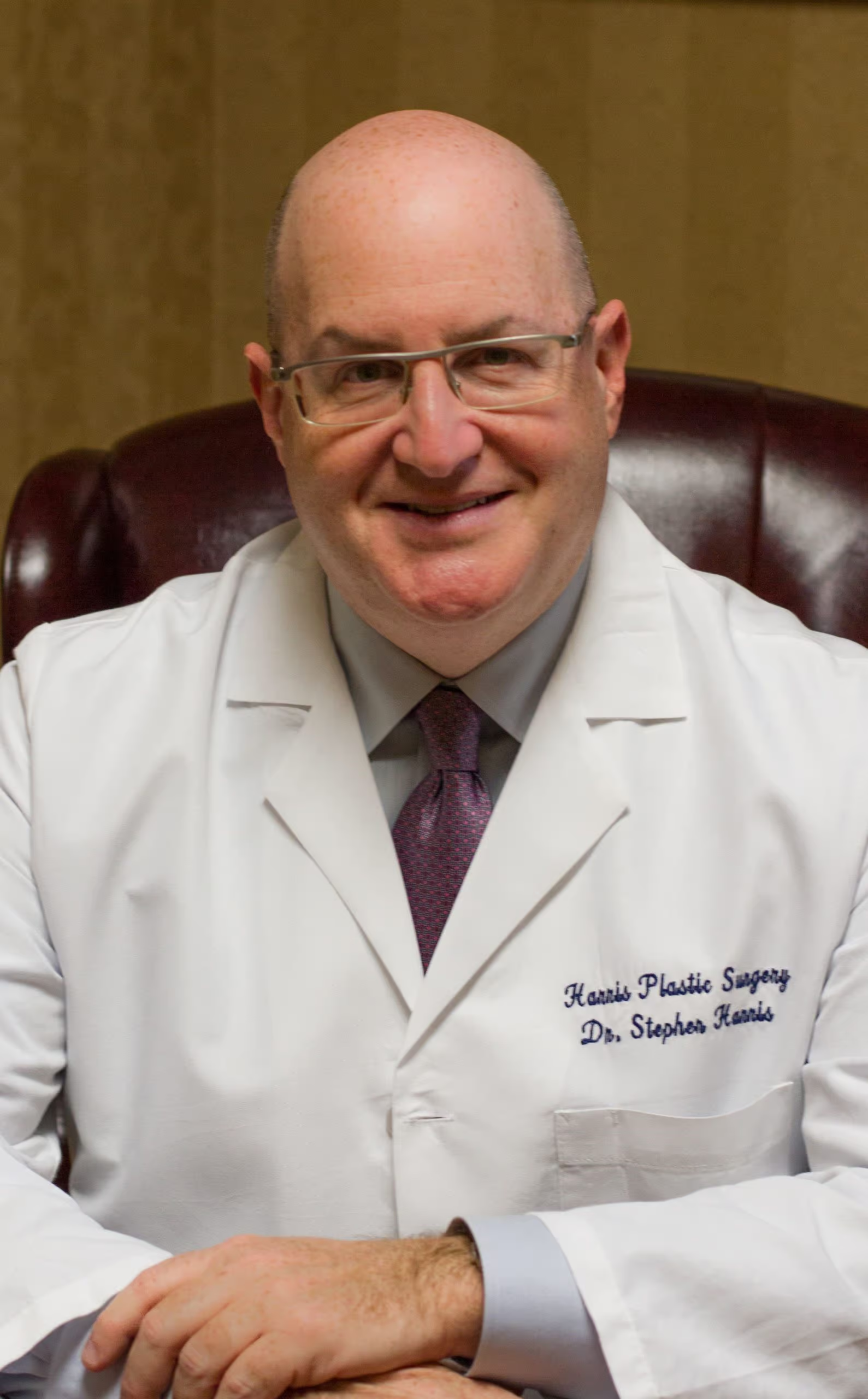
Stephen U. Harris, MD FACS
Dr. Stephen U. Harris is a board-certified plastic surgeon and recognized expert in breast reduction and reconstruction surgeries, having performed thousands in his career. When it comes to patient care, his philosophy is that every surgery should improve his patient’s overall quality of life, not just their appearance. Dr. Harris stays up-to-date on all the latest advancements in breast augmentation, reconstruction, and reduction and is a recognized innovator in the field. In fact, he was the first surgeon at Good Samaritan Hospital to offer primary prepectoral implant breast reconstruction, as well as secondary prepectoral revision surgery.
Dr. Harris also serves as Chief of Plastic Surgery at Good Samaritan Hospital in West Islip, New York, and is an active staff surgeon (and former Chief of Plastic Surgery) at South Shore University Hospital in Bay Shore, New York.