

Patients with upcoming breast reduction procedures often focus on preparing for the surgery itself, but it’s also important to make sure everything is in place for the recovery period. To make your healing process smoother and more comfortable, here’s a list of what to buy for breast reduction recovery to support your comfort, hygiene, and overall healing experience.
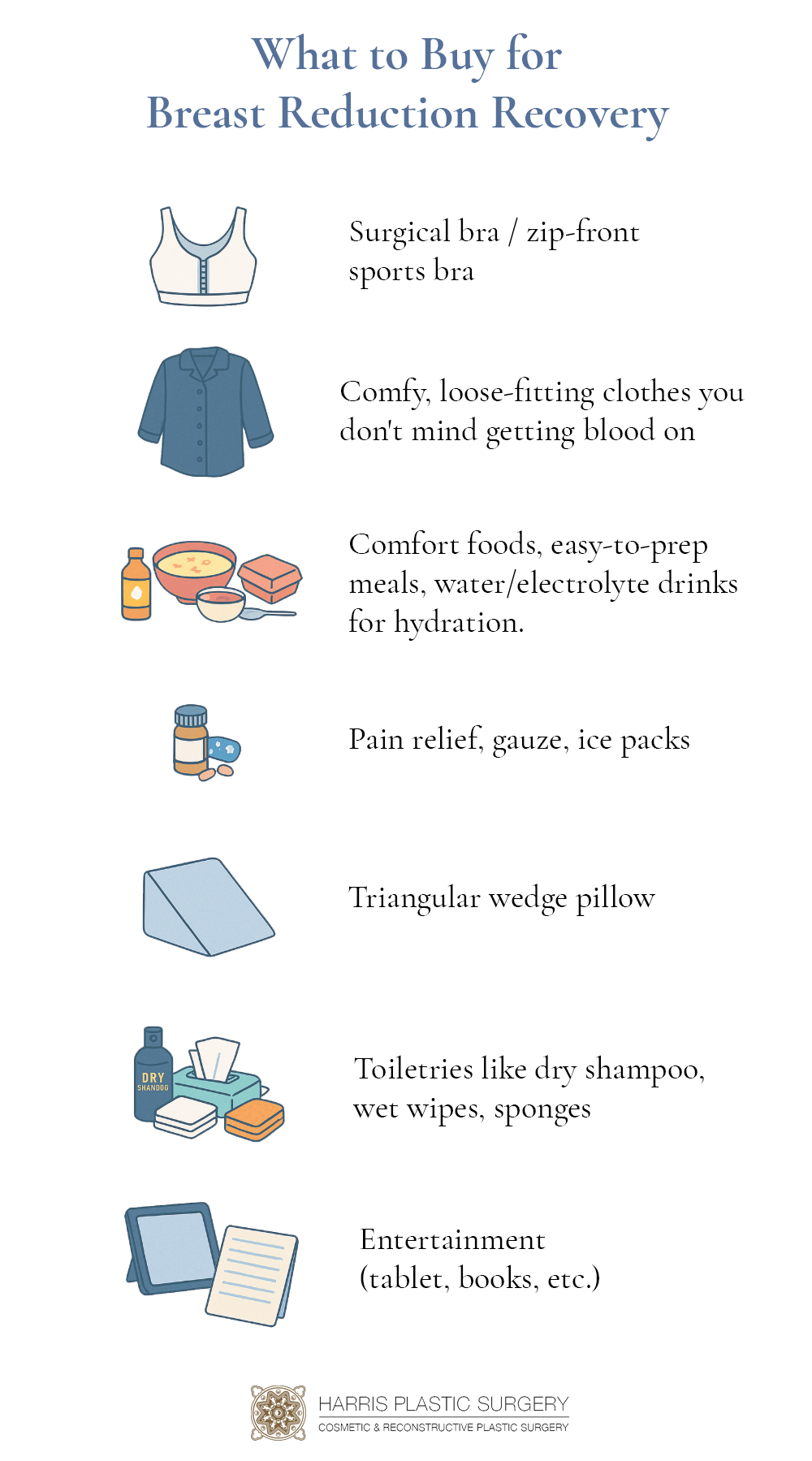
Surgical Bra or Zip-Front Sports Bra
Your surgeon will likely recommend a compression or surgical bra to minimize swelling, support healing tissue, and protect your stitches. Zip-front bras are easier to get on and off when your movement is limited and your arms and chest are sore.
It’s a good idea to buy two or three so you have backups. Most surgeons recommend avoiding underwire bras for at least 6 weeks after the procedure, or longer depending on how your recovery is progressing.
Comfy, Loose-Fitting Clothes
It’s important to stay as comfortable as possible during your healing and recovery, so you’ll need soft, loose-fitting clothes. Also, small amounts of bleeding and post-surgery drainage are normal, so make sure you have clothes you don’t mind getting dirty.
Many patients like to lean towards dark colors and breathable fabrics like cotton. Opt for button-down or zip-up tops, as over-the-head shirts can be difficult to put on and take off.
Snacks, Meals, and Hydration
Especially during your first few days of recovery, you probably won’t feel like cooking. It’s a good idea to stock up on:
-
- Comfort foods
-
- Your favorite snacks
-
- Easy-to-prepare meals
-
- Water and electrolyte drinks
If time permits, you can also prepare some meals ahead of time and freeze them. Try to focus on healthy, whole foods to support your recovery, and choose low-sodium options when possible to prevent excess swelling.
Pain Relief and Other Pharmacy Supplies
Your surgeon will likely prescribe pain meds, but you’ll also want over-the-counter options to use in the later stages of your recovery. Just make sure you’re always following the advice of your surgeon when it comes to the types and dosages of pain medications you’re using.
We also recommend gauze for changing dressings, and cold compresses or ice packs to manage swelling. Make sure you use a soft fabric barrier between the ice pack and your skin to avoid freezer burn.
Triangular Wedge Pillow or Pillow Stack
You’ll need to sleep on your back and slightly upright to reduce swelling and pressure during your recovery. A wedge pillow or stack of firm pillows will keep you in the correct position, and maintain your comfort throughout your recovery. You can also use extra pillows under your arms to help your circulation.
Toiletries You Can Use Without a Shower
Showering may be off-limits for several days. To keep yourself feeling fresh and clean, you’ll need:
-
- Dry shampoo
-
- Facial wipes
-
- Wet wipes or sponges
For easy access, keep these in a bedside caddy or on a rolling cart if you have one.
Entertainment and Distractions
You’ll be off your feet for a while, so make sure you have some ideas on how to keep your mind occupied. Queue up some books, audiobooks, shows, podcasts, or puzzles for entertainment, and think about investing in a phone or tablet stand so you can watch shows hands-free while resting.
What to Expect During Breast Reduction Recovery
Breast reduction surgery (also known as reduction mammoplasty) usually requires 2 to 6 weeks of recovery time, depending on your health, age, and the specifics of your procedure.
In the first week, you’ll likely experience:
-
- Swelling and bruising
-
- Tenderness and fatigue
-
- Restricted arm movement
-
- Limited ability to shower or move around
Because of this, the first 7 to 14 days post-op are critical. Having the right products ready can reduce your discomfort, lower the risk of infection, and help you rest properly, which speeds up the healing process.
Quick Tips for Breast Reduction Recovery
As well as knowing what to buy for breast reduction recovery, there are a few other steps you can take for safe, smooth healing:
-
- Follow your surgeon’s aftercare instructions carefully
-
- Avoid lifting your arms above shoulder level for at least one week
-
- Don’t drive while taking prescription pain meds
-
- Wear your post-op bra 24/7 unless instructed otherwise
-
- Rest as much as your body needs and don’t rush your healing
Consult With a Board-Certified Plastic Surgeon
Breast reduction surgery can bring immense physical and emotional relief, but the healing process matters just as much as the procedure itself. To make sure you fully understand what the recovery process involves, and what to buy for breast reduction recovery, take the time to consult with an expert surgeon.
Dr. Stephen Harris is a renowned plastic surgeon with more than 35 years of experience in reconstructive and aesthetic breast surgery. He takes the time to provide personalized consultations, answer your questions, and thoroughly explain your specific procedure and recovery expectations.
